Sewage and Biohazard Cleanup Orlando
Category 3 water is the deciding factor. Under the IICRC S500 standard, sewage backups, toilet overflows containing waste, and rising groundwater or flood water are all Category 3, meaning porous materials that…
Category 3 water is the deciding factor. Under the IICRC S500 standard, sewage backups, toilet overflows containing waste, and rising groundwater or flood water are all Category 3, meaning porous materials that…
Category 3 water is the deciding factor. Under the IICRC S500 standard, sewage backups, toilet overflows containing waste, and rising groundwater or flood water are all Category 3, meaning porous materials that absorbed it are removed rather than dried in place. Carpet, pad, insulation, and drywall below the water line are cut out and discarded; hard, non-porous surfaces such as tile, concrete slab, and sealed hardwood can be cleaned, disinfected, and salvaged. This is where sewage cleanup differs from a clean-water leak: a supply-line break is Category 1 and much of the material dries and stays, while a sewer event trades salvage for sanitation.
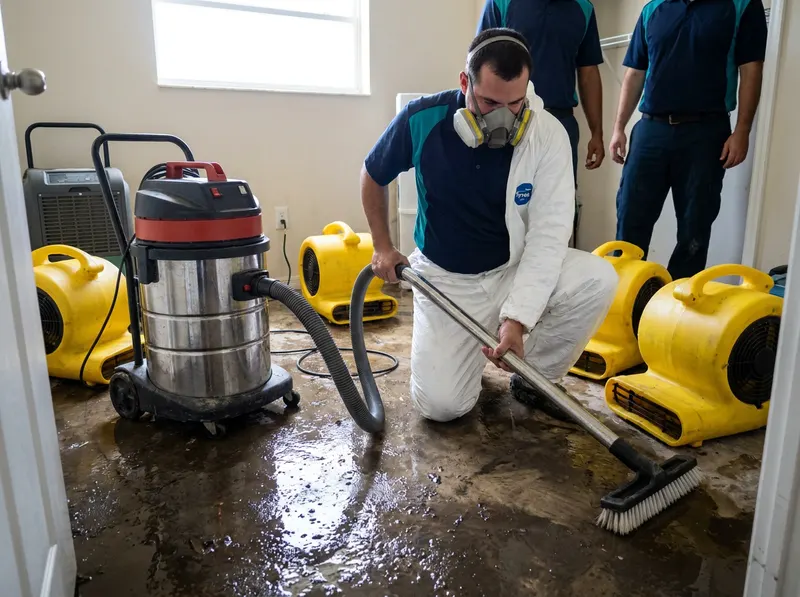
The sequence runs in five plain steps. First, technicians extract the contaminated water and dispose of it as regulated waste. Second, they remove and bag unsalvageable porous materials. Third, they HEPA-vacuum and clean every affected surface. Fourth, they apply an EPA-registered antimicrobial to remaining structure. Fifth, air movers and LGR dehumidifiers dry the cavity, with moisture meters confirming framing returns to a dry standard (roughly 12, 16% wood moisture content depending on the assembly). A humid Central Florida climate, dew points above 70°F through the summer, lengthens drying, so many jobs run 3, 5 days on-site.
Orlando's building stock shapes the work. Slab-on-grade homes in Conway, Pine Hills, and Azalea Park hold sewage at floor level, so extraction and slab disinfection dominate. Older two-story houses near Colonialtown and the Milk District can push contamination down through joist bays and first-floor ceilings. Homes near Lake Underhill and the Little Wekiva drainage sit low and see backups when heavy summer rain overwhelms the sanitary line. If contamination touched an HVAC return or duct at floor level, the affected ductwork is cleaned or replaced, because the system can otherwise recirculate pathogens through the whole house.
Decision guidance is direct. If the water is clear from a supply line and no waste is involved, standard water extraction and drying applies. If the water came from a toilet trap, a sewer main, or an outdoor flood, treat it as biohazard: keep people and pets off the area, avoid tracking it onto clean flooring, and have the porous materials removed rather than dried. Blood, bodily fluids, or unattended-death situations fall under biohazard remediation and follow the same containment and disinfection protocol with tighter PPE and regulated-waste handling.
Every job gets a firm, written price after a free on-site visit.
Tell us about your sewage and biohazard cleanup job in Orlando and we'll send a clear, written quote, usually the same day.